Gastric Dilation-Volvulus or GDV is a time-sensitive, life-threatening condition that requires immediate medical attention. Understanding the severity of GDV is key. Gastric dilation-volvulus is a phrase that describes a bloated and flipped stomach. It occurs when the stomach fills with air, fluid, and or food, becomes distended (bloated), and then twists on itself. This condition, if untreated, is fatal. The pain experienced during a GDV episode is some of the worst pain imaginable for a pet. Let's explore who is at risk, signs and symptoms to watch for, and steps towards prevention of gastric dilation-volvulus.
What Causes GDV in Dogs? And What Happens?
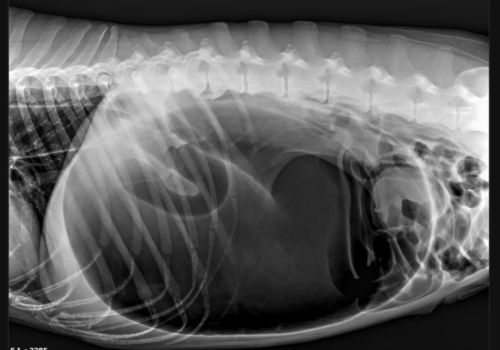
Gastric dilation and gastric volvulus can occur separately from each other, but together they are a recipe for disaster. Gastric dilation in dogs(bloat) allows the stomach to rotate on itself, resulting in volvulus. The term volvulus means twisting of the GI tract, so in this case, gastric volvulus specifically means "stomach twisting." When this happens, the bloated and rotated stomach can cut off important blood supplies to the spleen and stomach. The change in blood circulation then impacts the heart and can ultimately lead to systemic shock and cardiac arrhythmias. As this progresses, the compromised blood supply to vital organs leads to cell death and organ damage/failure. The stomach, while dilated in this position, can also push against the diaphragm, making your dog struggle to breathe. The stomach can also rupture, leading to significant internal bleeding and sepsis (Cornell College of Veterinary Medicine).
Warning Signs of Bloat in Dogs to Watch For
Initial signs of GDV usually stem from the associated abdominal pain the pet is experiencing. These include non-productive retching, excessive drooling, panting, bloated/distended abdomen, painful abdomen, restlessness, pale gums, weakness, or your dog assuming the "praying position." In this position, their forelimbs are extended forward and their chest is closer to the ground. If your pet exhibits any of these clinical signs, they should be taken to the nearest emergency room and evaluated immediately by a veterinarian.
Diagnosing GDV in Dogs
Initial evaluation of a GDV patient commonly includes emergent abdominal x-rays (radiographs) and bloodwork. An ECG (electrocardiogram) will often be used to monitor your dog's heart for abnormalities since GDV progressively impacts the patient's circulatory system. The striking radiographic abnormalities often lead to a definitive diagnosis, so subsequent interventions can be taken immediately.
How Is GDV Treated?
Treatment will vary depending on how far your dog's GDV has progressed. Once stable, the stomach needs to be decompressed, and surgical intervention under general anesthesia is required to de-rotate the stomach. During the procedure, the surgeon will evaluate the entire abdominal cavity. With the stomach returned to its normal position, a gastropexy will be performed. A gastropexy procedure involves suturing the stomach to the body wall, preventing it from flipping again.
Dog GDV Risk Factors
According to the American College of Veterinary Surgeons, GDV has been reported in nearly all breeds, but there is a strong association in dogs that:
- Have a deep chest
- Eat a single large meal a day
- Are older
- Are related to other dogs who have had GDV
- Eat too quickly
- Use a raised food bowl
- Exercise too soon after eating
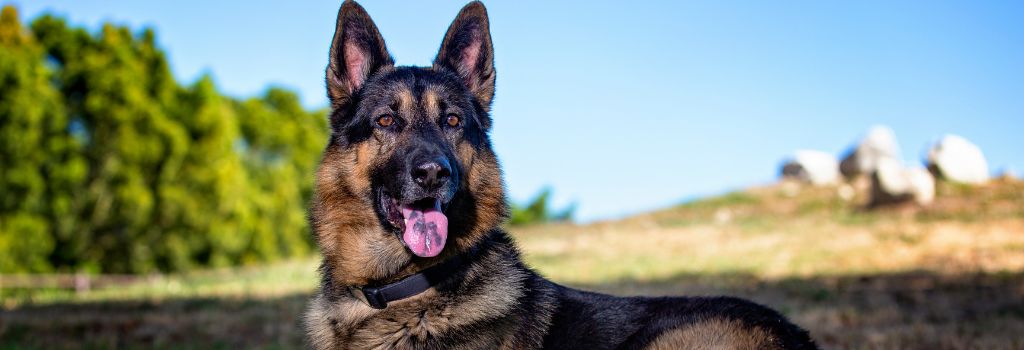
Commonly affected breeds include Great Danes, Weimaraners, St. Bernards, Irish Setters, German Shepherds, Standard Poodles, Doberman Pinschers, Basset Hounds, and Gordon Setters.
Prevention of GDV
The risk of GDV in your dog can be decreased by having a preventive gastropexy surgery performed. This can be done in conjunction with another elective surgery, such as a spay or neuter. We do preventive gastropexy procedures on scheduled surgery days with specific doctors. Another way to decrease the risk of GDV is to alter your dog's feeding routine. For those that seem to inhale their food, using a slow-feeder bowl can be helpful. Also, make sure to rest your dog for 1-2 hours after eating a meal as well!
Outcomes of GDV
Prompt diagnosis and treatment of GDV will lead to a better outcome for your pet. Time is not on your side! Without surgical intervention, GDV will be fatal to your dog. The minutes matter in this situation, and if your dog experiences any of the clinical signs, you need to take them to a veterinarian right away for evaluation. According to Cornell, the survival rate with correct intervention is greater than 80%, but remember, how fast YOU react to your pet's symptoms will ultimately determine their outcome.
If you have questions and you'd like to reach out to us, you can call us directly at (941) 253-5218, or you can email us at staff@uacvet.com. Don't forget to follow us on social media Facebook, Instagram.