
Diagnostics and Imaging
Diagnostics and Imaging for Dogs and Cats
Modern Tools for Accurate Answers
When pets aren’t feeling well, the hardest part for many families is not knowing what’s wrong.
Diagnostics and imaging help our veterinary team look deeper into your pet’s health so we can understand what is happening inside the body. These tools allow us to evaluate organs, bones, and internal systems, often before symptoms become more serious.
At University Animal Clinic, our purpose-built hospital allows us to perform many diagnostic tests right here in our facility. This means faster answers, clearer information, and a care plan that can begin sooner for our pet families in the Lakewood Ranch, Sarasota, Bradenton, and surrounding communities.
Our goal is always the same: to understand what your pet is experiencing and help them feel better as quickly and comfortably as possible.
A Calm, Compassionate Approach
Diagnostic testing should never feel rushed or stressful for your pet.
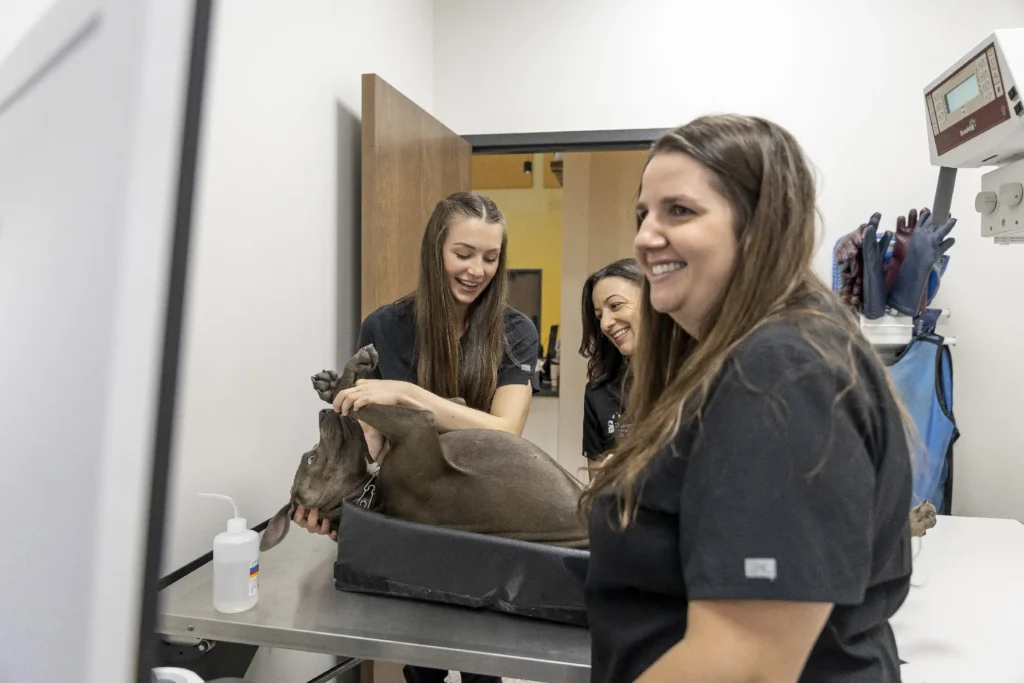
Our team works carefully at each pet’s pace. Whenever possible, we use gentle handling, treats, and positive reinforcement to help pets feel safe and comfortable during testing.
Many pets tolerate diagnostic tests very well with minimal restraint. If a pet is nervous or uncomfortable, we adjust our approach to keep the experience as calm as possible.
Your pet’s emotional well-being matters just as much as the medical information we’re gathering.
Early Detection Matters
Many illnesses develop quietly before obvious symptoms appear. Diagnostic testing allows us to detect these changes early, often before pets begin to feel unwell.
Early detection gives us the best opportunity to:
- begin treatment sooner
- manage chronic conditions effectively
- prevent complications
- support your pet’s long-term quality of life
Diagnostic Services
Digital X-Rays (Radiographs)
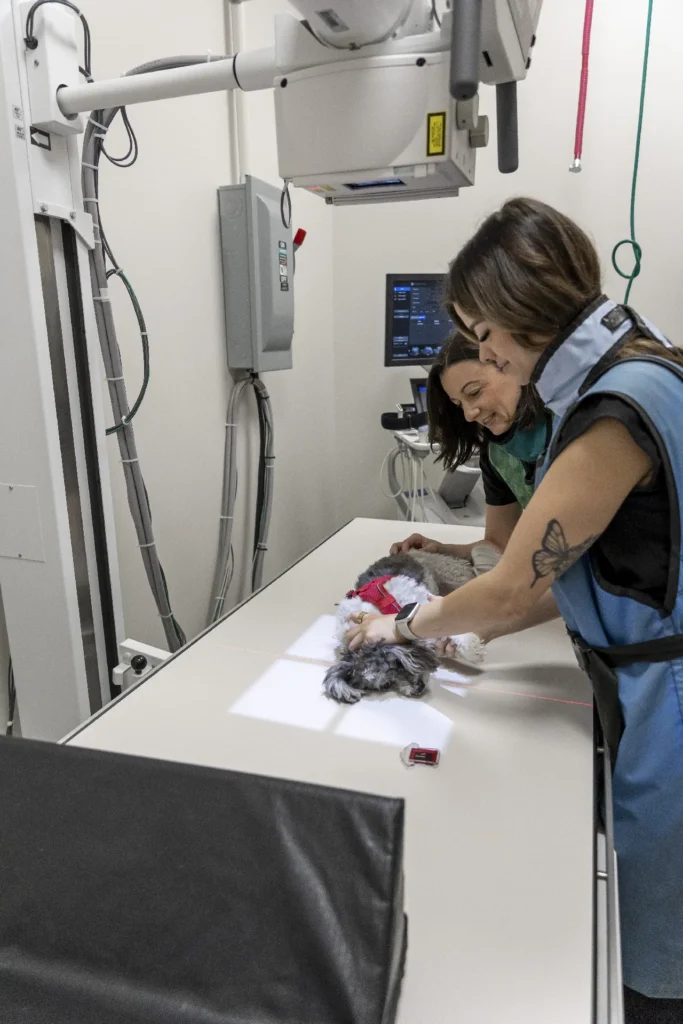
Digital X-rays allow our veterinary team to look inside the body and evaluate structures that cannot be seen during a physical exam.
These images help us examine:
- bones and joints – lungs and heart
- the abdomen and digestive system
- bladder stones or foreign objects
- injuries or fractures
Digital X-rays are fast and provide immediate images that help our veterinarians make informed decisions about your pet’s care.
Dental X-Rays (Radiographs)
Many dental problems occur below the gumline, where they cannot be seen during a visual exam. Dental X-rays allow our veterinary team to evaluate the roots of teeth and the surrounding bone structure.
This helps us detect issues such as:
- hidden infections
- tooth root damage
- fractures below the gumline
- bone loss around the teeth
These images allow us to diagnose dental problems earlier and recommend treatment before pets experience more serious discomfort.
Ultrasound Imaging
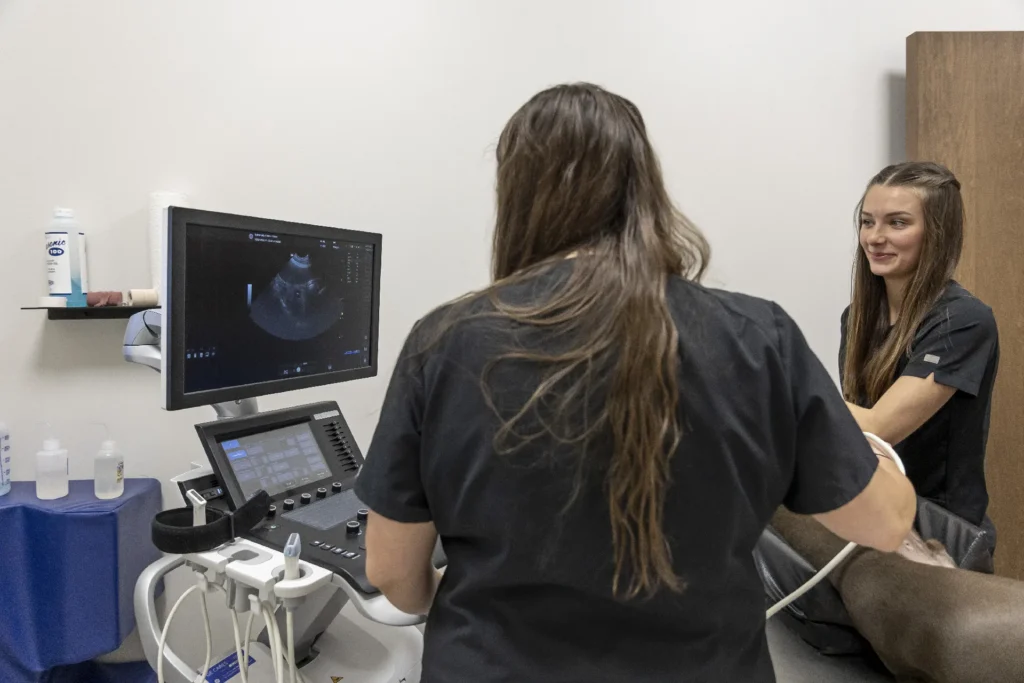
Ultrasound is a safe and noninvasive way to examine your pet’s internal organs using sound waves. Unlike X-rays, which are best for viewing bones, ultrasound allows us to evaluate soft tissues and organs in real time.
Ultrasound can help us examine:
- the liver, kidneys, and spleen
- the bladder and urinary tract
- the digestive system
- masses or internal abnormalities
- pregnancy and fetal development
Because ultrasound is painless and gentle, many pets tolerate the procedure very well.
Laboratory Testing
Laboratory testing gives us valuable information about how your pet’s body is functioning internally.
The most common tests include blood work and urine testing, which allow us to evaluate many aspects of your pet’s health.
These tests can help us monitor or detect:
- organ function – thyroid levels
- blood cell counts – electrolyte balance
- infections
- urinary tract problems
Lab work often serves as an important starting point when pets are sick, helping us narrow down possible causes and determine the next steps.
Laboratory Testing Video
Laboratory Testing for Dogs and Cats
Laboratory Testing for Dogs
Blood work for dogs is very similar to blood testing in people. A small sample is usually collected from a vein in the neck or leg. Most pets tolerate the process well, and it typically feels like a quick pinprick.
These tests help veterinarians evaluate:
- red and white blood cell levels
- liver and kidney function
- glucose levels
- thyroid health
- protein levels
Routine lab work is especially helpful for senior dogs, since many medical conditions develop gradually over time. Detecting changes early often allows treatment to begin before symptoms become severe.
Laboratory Testing for Cats
Cats are particularly good at hiding signs of illness, which is why diagnostic testing can be so valuable.
Blood and urine testing allow veterinarians to look for early signs of conditions such as:
- kidney disease
- hyperthyroidism
- urinary tract infections
- diabetes
- liver disease
- anemia
Even when cats appear healthy, baseline lab tests help us track changes in their health over time. Comparing current results to previous tests helps us recognize when something has changed.
Answers Start with Advanced Diagnostics
When pets are sick, diagnostic testing helps us understand what is happening and begin treatment sooner. Our in-house diagnostic tools allow us to get answers quickly and create a clear treatment plan. Schedule an appointment today.