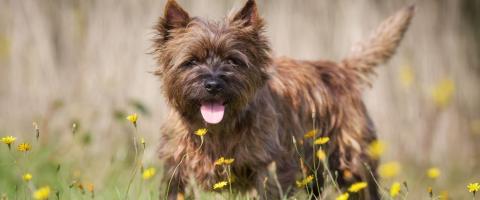
Shining the spotlight on a lively and lovable breed—the Cairn Terrier. Let's jump right into what makes this breed both charming and cheeky!
The Paws-itive Traits:
- Upbeat Attitude: These dogs are lively and friendly, making them a joy to be around.
- Fetch Fanatic: Cairns love playing games, especially fetch. A perfect backyard buddy!
- Family-Focused: Affectionate and great with kids, they're ideal for families.
- Low Maintenance Coat: Their short, easy-to-care-for coat is a groomer's dream.
- Quick Learner: Easily motivated and trainable, Cairns love to please.
- Small but Mighty: Don't let the size fool you; these terriers are sturdy and robust.
Here are the Caveats:
- Needs Stimulation: They require lots of activity and mental engagement to keep boredom at bay.
- Predatory Instinct: Small animals, including cats, should beware.
- Tiny but Fearless: They have no qualms about facing off with much larger dogs.
- Boredom Equals Trouble: Without stimulation, they may get into mischief.
- The Digging Habit: These terriers love to dig, so your garden might be at risk!
- Stubborn Streak: Strong leadership is essential to manage their willfulness.

A Glimpse into History
Originating in Scotland over 200 years ago, Cairn Terriers were bred for vermin control in rock piles—hence the name 'Cairn.' They excel at tricks and games, which makes them fantastic companions for children. Ever heard of Toto from The Wizard of Oz? Yep, that was a Cairn Terrier!
Health Matters
Generally a hardy breed, Cairn Terriers have an average lifespan of 13-14 years. However, they're prone to certain health issues like diabetes and patellar luxation. Routine vet check-ups are key to their well-being.
The Final Verdict
The Cairn Terrier is an all-around fantastic pet with a personality that's larger than life. Whether you're single, part of a young family, or even enjoying the golden years, a Cairn Terrier can add a joyful burst of energy to your life.

Genetic Predispositions for Cairn Terriers
Liver Problems in Your Cairn Terrier
Our Cairn Terriers are more prone to a liver issue known as portosystemic liver shunt (PSS). In this condition, the blood that should nourish the liver takes a little detour, bypassing the liver altogether. This skimping on blood supply means your pooch's liver can't efficiently remove toxins, leading to symptoms like stunted growth or even seizures. Yikes, right? But don't fret—whenever your Cairn needs anesthesia, your veterinarian will likely run a liver function test along with the standard pre-anesthetic panel. Surgery might be on the table, but in some cases, a special diet and medication will do the trick!
Eye Trouble? Look Out!
A dog's eyes are the windows to their playful souls, but unfortunately, Cairns can inherit some rather nasty eye conditions. Conditions like glaucoma can cause severe pain and lead to blindness if not promptly treated. We keep a close eye on this during regular vet checkups. If you spot symptoms like squinting or a bluish cornea, hustle to the emergency clinic. Glaucoma waits for no one, and neither should you!
Cataracts and Other Eye Woes
As your Cairn ages, those sparkling eyes may cloud over due to cataracts. This is a common age-related issue that could cause blindness, but many dogs adapt just fine. Another common condition in Cairns is Distichiasis, where extra hairs grow inside the eyelid, leading to painful corneal ulcers. Lucky for your pup, treatments are effective and often permanent!
Your Cairn and Diabetes
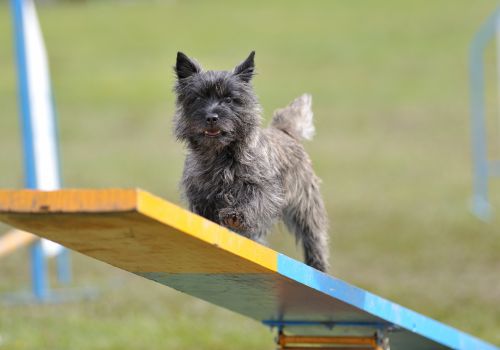
Diabetes isn't just a human ailment; it affects our pets too! Cairn Terriers are, sadly, above-average candidates for diabetes, marked by symptoms like excessive eating, drinking, and urination. Your doctor will run the necessary tests and talk about treatment options, which usually involve daily insulin injections. It’s a commitment but one that could save your dog's life.
Does Your Cairn Hop and Skip?
Don't be fooled by those adorable little hops; your Cairn could be dealing with a slipped kneecap or patellar luxation. While it often looks harmless and cute, it may require medication or even surgery in severe cases.
Blood Disorders
If you've got a Cairn, it's essential to know about bleeding disorders common to the breed. Conditions like Hemolytic Anemia and Thrombocytopenia can make surgery or injuries a serious risk. We'll do clotting tests before any surgical procedures and recommend treatments that can include medications and sometimes emergency transfusions.
Allergies and Atopy
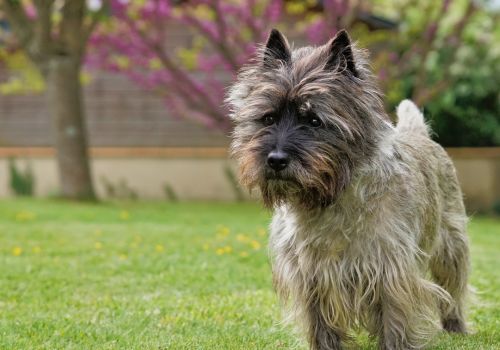
Cairns often suffer from atopy, a skin allergy causing itchiness, particularly around the feet and ears. The bright side? There are various treatment options to make your pet more comfortable!
Aging and Chronic Conditions
Our Cairns are prone to age-related conditions like heart disease and kidney stones. Regular screenings help catch these issues early, making them more manageable. Medications and special diets can help manage these conditions and prolong your pet's life. For joint issues like hip and elbow dysplasia, keeping an eye out for stiffness and lameness can help catch the problem early. X-Rays and possible surgeries are options for severe cases.
Hip Necrosis and Kidney Disease
Young Cairn Terriers can suffer from Legg-Calve-Perthes Disease, a painful degenerative hip condition. Early diagnosis and possibly surgery can be life-changing. Similarly, an inherited kidney disease known as Glomerulonephropathy can affect Cairns at a young age. Yearly urine analysis and possibly a special diet can make a huge difference.
If you have questions and you'd like to reach out to us, you can call us directly at (941) 253-5218, or you can email us at staff@uacvet.com. Don't forget to follow us on social media Facebook, Instagram.